
RETIRE IN
VIETNAM.
Among the lowest costs in Asia, with lantern-lit old towns and a fast-growing expat scene.
Find my personal matches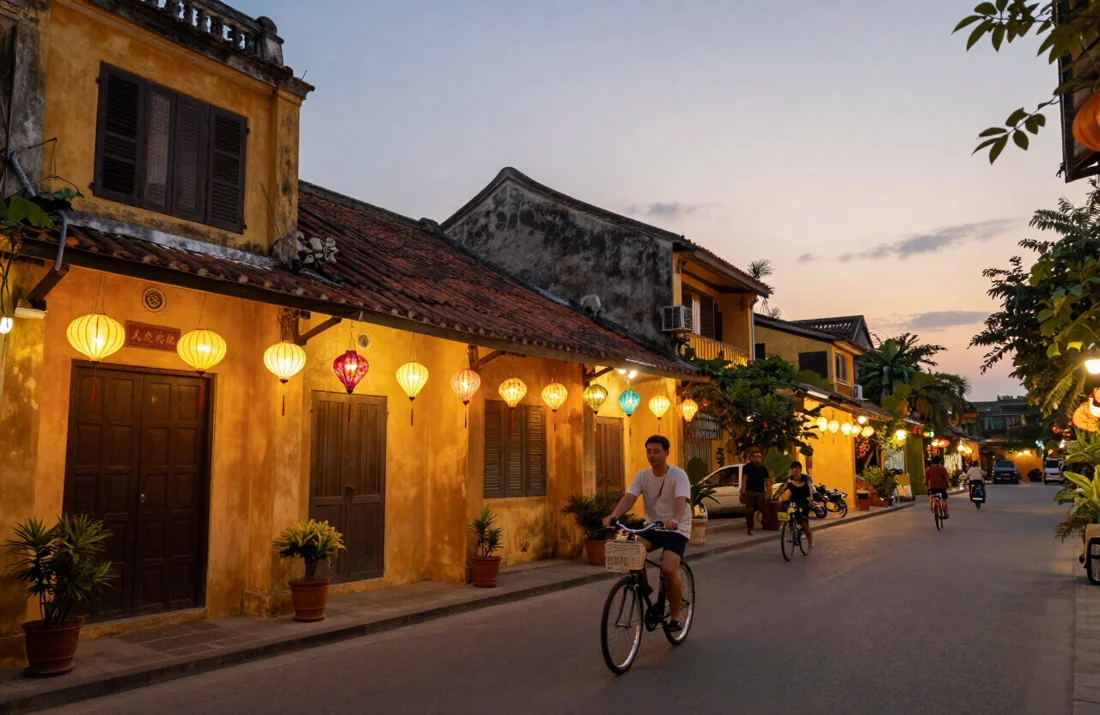
What retirement in Vietnam can look like
Vietnam appeals to people who enjoy energetic cities, a strong street-food culture, and a wide choice of coastal and urban bases. Da Nang and Nha Trang put the beach close to daily life, while Ho Chi Minh City and Hanoi offer deeper business, dining, and service networks. Those places do not have the same weather, pace, housing stock, or healthcare access.
Affordability is only one part of the decision. Traffic, noise, air quality, language, payment habits, and the absence of a simple retirement-specific residence assumption in this model all require separate research. Vietnam is best approached as a place to test carefully, with a legal stay plan that is confirmed before any long lease.
Who may like it
- People who enjoy dense, active cities or want a coastal city rather than an isolated resort.
- Flexible retirees who are comfortable learning new routines and handling more daily-life friction.
- Travelers whose budget includes private healthcare, flights, visa administration, and a contingency reserve.
Tradeoffs to investigate
- Crossing busy roads, scooter traffic, construction noise, and uneven sidewalks can matter more in daily life than they do on a short holiday.
- Healthcare options are strongest in major cities; complex care may require travel or a plan for treatment elsewhere.
- The official e-Visa is a visitor permission with a limited validity period, not proof of a permanent retirement route.
How much could retirement in Vietnam cost?
Our comfortable-lifestyle planning range is $1,200–$1,800 per month for one person. These are transparent model outputs for comparison, not scraped listings, live market quotes, or a promise that every city fits the range.
| Lifestyle | One person | Two people |
|---|---|---|
| frugal | $900–$1,350 | $1,350–$2,050 |
| comfortable | $1,200–$1,800 | $1,800–$2,700 |
| premium | $1,800–$2,700 | $2,700–$4,050 |
The range represents a general all-in lifestyle and is not an itemized rental quote. Two-person costs use a 1.5 multiplier. Housing, healthcare, travel, taxes, and city choice can change a real budget substantially. Review every assumption and limitation.
Healthcare planning
6/10A comparative research rating, not a hospital grade. Check individual providers and insurance around your own needs.
Internet reference
45.92 MbpsHistorical country mean download speed for the year ending June 2024. It does not predict a building’s Wi-Fi. Source ↗
Budget reference
$1,200–$1,800Comfortable solo model. Your calculator separately considers income, savings, household size, and lifestyle.
Places to research in Vietnam
A country-level score cannot tell you which city or neighborhood will work. These starting points have materially different tradeoffs.
Da Nang combines a broad beach, a growing apartment market, and access to city services. Compare the river side with beach-side neighborhoods, investigate storm-season flooding and building noise, and identify the hospitals you would use before choosing a tower.
Nha Trang is a compact coastal city with a tourism economy and a long urban beach. Visit beyond the central beachfront, compare seasonal atmosphere, and check how comfortably you can reach daily services without relying on vacation-area pricing.
Ho Chi Minh City offers the country’s deepest range of international services and private healthcare. District choice changes commute time, noise, rent, and walkability; a modern apartment far from your regular errands may be less convenient than a smaller home in a central area.
Hanoi provides a distinct northern climate, dense historic neighborhoods, and strong cultural life. Winter dampness, summer heat, air pollution, and road congestion should all be experienced rather than inferred from annual averages.
Daily life and housing
A good Vietnam budget needs a transport decision. Walking conditions vary, buses and metro coverage are location-specific, and many residents rely on scooters or ride-hailing. If you do not plan to ride, price your likely journeys and choose housing around the services you use most. Save translated addresses and an offline map for the first weeks.
The climate changes significantly from north to south. Hanoi has a cooler, damp winter; central Vietnam has heavy-rain and storm periods; the south stays hot with wet and dry seasons. Check the exact months you expect to live there, then test the apartment’s ventilation, air conditioning, drainage, and street noise.
Research the provider, not the reputation
Private and international clinics are concentrated in the largest cities. Before treating a city as workable, locate routine care, an emergency department, and any specialist you use. Ask how payment and insurance claims work, whether your medications are available under the same name, and when a provider would recommend treatment outside the country. The site’s 6/10 rating is only a relative planning input.
Affordability is not permission to stay
Vietnam’s Immigration Department says its electronic visa is valid for a maximum of 90 days, for single or multiple entry. That makes it useful for a research trip but does not create a retirement residence status. Confirm the permission that fits your intended duration and circumstances directly with the Immigration Department or a Vietnamese diplomatic post; do not build a long-term plan around repeated entries without current official advice.
A practical research trip for Vietnam
Use a scouting visit to test a normal week. This checklist is intentionally specific enough to produce notes you can compare later.
- 01
Spend several nights in both a coastal and an inland neighborhood if the beach is part of the decision.
- 02
Use the transport you would rely on for groceries, appointments, and evening trips home.
- 03
Check construction, karaoke, traffic, and building noise at different hours before discussing a long lease.
- 04
Ask a clinic and pharmacy about your regular care and prescriptions; keep their answers as research, not medical advice.
- 05
Write a legal-stay timeline that covers the whole proposed year and verify every step with an official source.
Questions this page cannot answer for you
Does the modeled climate fit every part of Vietnam?
No. The model tags tropical, warm climate options and city, beach, nature settings at country level. Elevation, coast, season, and neighborhood can produce a very different experience. Compare historical weather and current local conditions for the exact place and dates you are considering.
Does a high match mean I qualify for residence?
No. Affordability and residence eligibility are separate. Check official requirements for your nationality, income type, age, work plans, household, insurance, and application location. The residence rating is a broad comparison input, not legal advice or an eligibility decision.
Can this range be my final retirement budget?
No. Replace the model with actual housing, insurance, medical care, taxes, travel, transport, document, currency, and emergency-reserve research for your household. We do not forecast future prices, investment returns, tax liability, or exchange rates.
Where to continue the research
Official sources are the starting point for rules and entry conditions. We last reviewed this editorial page on October 19, 2026. If a source or factual statement has changed, email support@retirefromthewest.com with the page address and supporting link.
Find your personal shortlist.
Compare Vietnam with nine other destinations, then use these guides to investigate the result.